
GP Contracting Group
Insurance Restoration Strategy

Rebuild It Back,or Build It Better?

The claim restores what you had. This guide is about the smarter question: if you are going to put money on top, where does it actually work? A category-by-category look at where upgrade dollars earn their keep during a restoration, and where they quietly evaporate.

Why a Dollar Spent Now Buys More Than a Dollar Spent Later
Ask anyone who has renovated: the money is not in the pretty parts. It is in tearing out, hauling away, reframing, rewiring, and re-plumbing before a single visible finish goes in. In a standalone renovation, that preparation routinely consumes half the budget or more before anything looks different.
In an insurance restoration, the claim has already absorbed those stages for every area in scope. The trades are mobilized. The permits are pulled. The dust is already a fact of life. Which means any upgrade dollar you choose to add skips straight past preparation and lands entirely on the part you will actually see and live with.
That is the whole strategy in one sentence: the claim pays for the opening, so your money buys only finish. The same kitchen upgrade that costs a set amount inside a restoration can cost dramatically more two years later as a standalone project, because you would be paying for the opening all over again. What follows is where that leverage is strongest.
The High-Yield Categories
These are the areas where the combination of an already-open space and trade pricing consistently delivers the most visible result per dollar added.

    Kitchens

    Highest impact

    The most-used and most-seen room in the house, and the one buyers and guests judge first. If the claim opened the kitchen, the increment for a meaningfully better layout, counters, and cabinet fronts is the best-spent money on the project.

    Bathrooms

    Highest impact

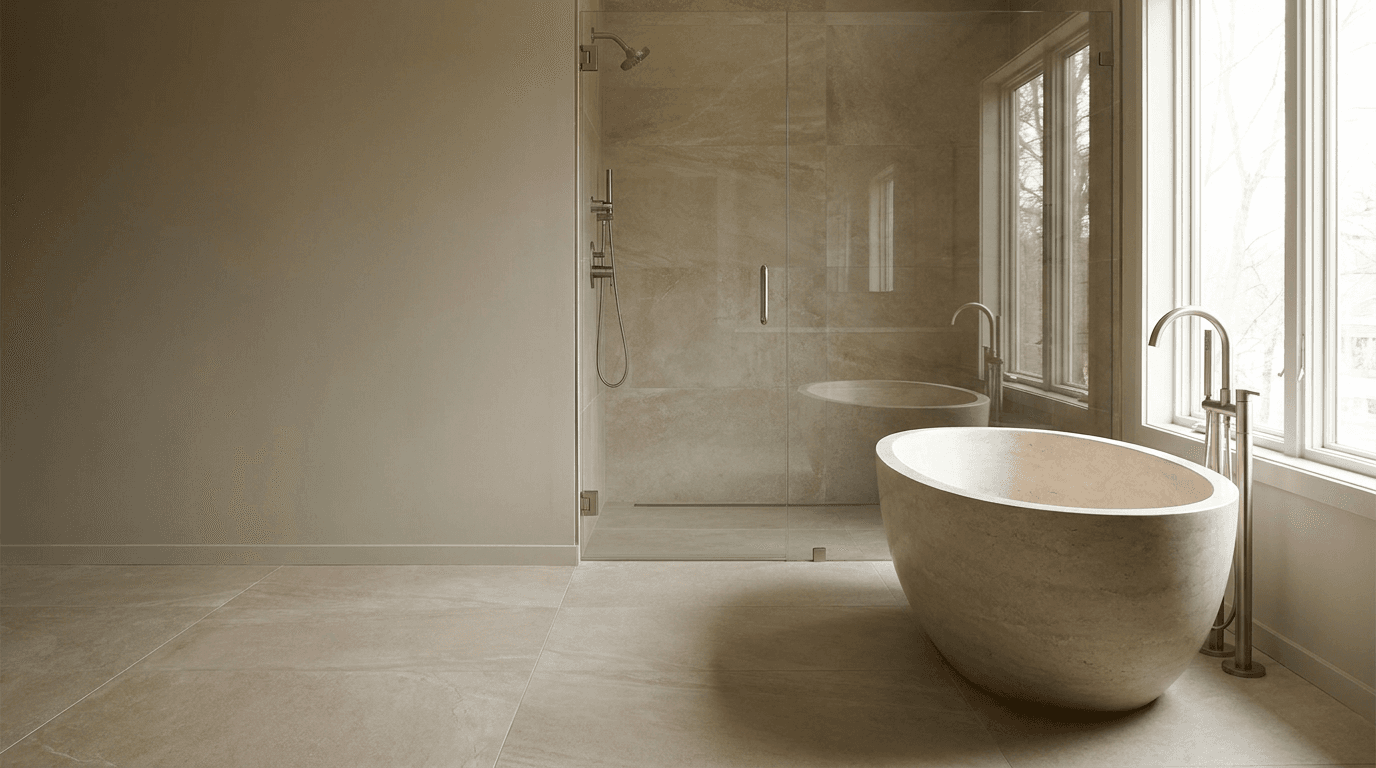
    Water losses hit bathrooms constantly, which means the tile, glass, and fixtures are often already in scope. Trade pricing on fixtures and the already-funded waterproofing stage make a genuine step up affordable here.

    Flooring

    Strong impact

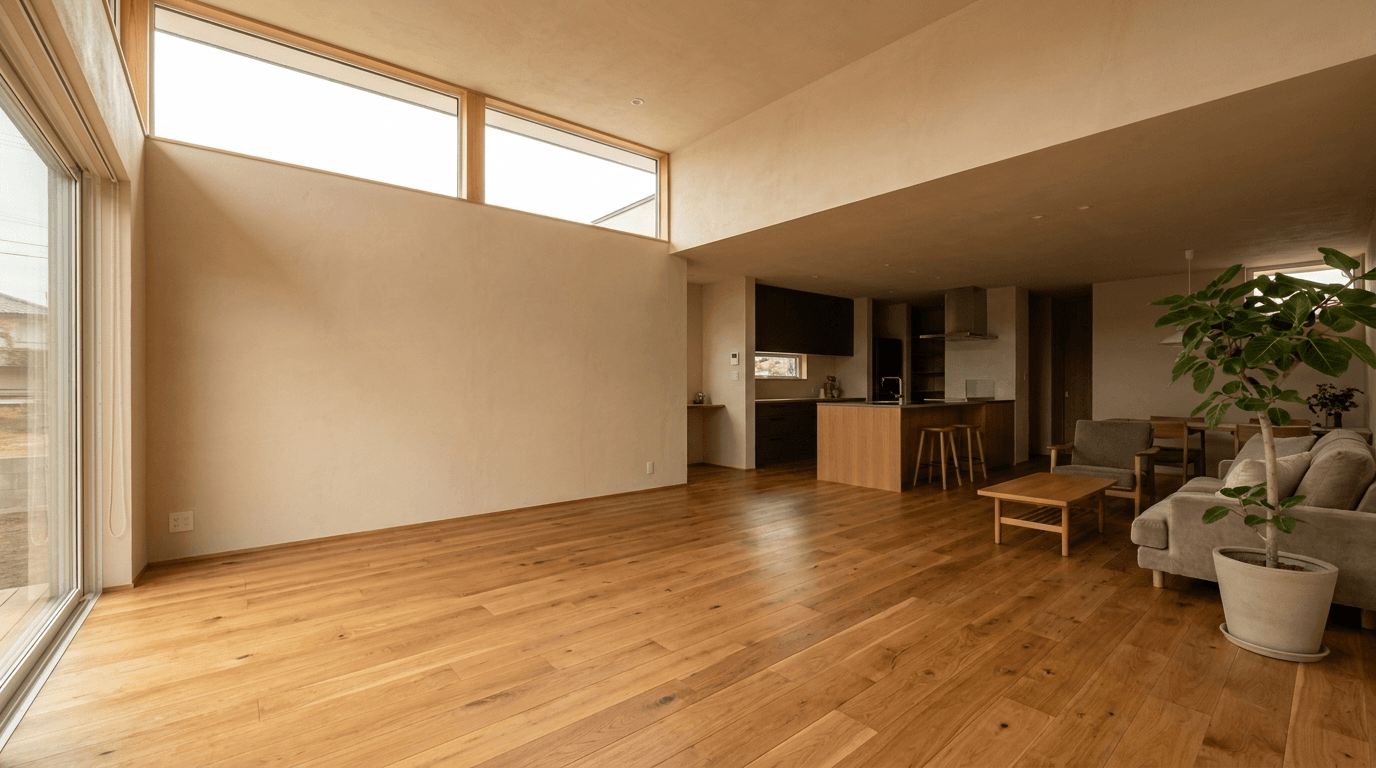
    When flooring is being replaced anyway across connected spaces, upgrading the material is a per-square-metre delta, not a new project. It is also the upgrade that unifies everything else visually.

    Lighting

    Strong impact, small delta

    Electrical rough-in is already happening. A designed lighting plan instead of a one-for-one fixture swap changes how every finished surface reads, for a fraction of the attention the other categories demand.

    Insulation and sound separation

    Invisible, permanent, cheap right now

    The one upgrade that is only ever affordable while framing is exposed. Between bedrooms, around bathrooms, under floors: this is the last chance to buy quiet at open-wall prices.

    Built-in storage and millwork

    Strong impact

    Closets, mudroom built-ins, a proper pantry. Carpentry is on site and finishing is already scheduled, which is precisely when custom storage stops being a luxury line item.

    Paint, trim, and hardware

    Small money, daily payoff

    The cheapest category on the page and the one you touch every single day. Almost never worth skipping.

The Low-Yield Spends, Named Honestly
A contractor who only ever says yes is not advising you. These are the spends we regularly talk clients out of, because the restoration's leverage does not extend to them.

    Rooms the claim never touched

    The efficiency of upgrading during restoration comes from the opening already being paid for. In an undamaged room, there is no opening. Work there is a standalone renovation at standalone prices, and bundling it into the project timeline does not change the math, it just hides it.

    Relocating plumbing without a reason

    Moving a sink or toilet a metre for preference, not function, drags rough-in, slab or subfloor work, and inspection into what was a finish decision. If the layout works, spend on what you touch and see instead.

    Over-speccing what no one experiences

    There is a sensible version of upgrading hidden systems, covered in the previous guide, when a damaged system must be replaced anyway. Beyond that, premium spend buried in walls that neither comfort nor resale will ever register is budget taken from categories that would show it.

    Chasing the trend of the year

    A restoration is a long-horizon reset. Materials and colours at the peak of fashion date the fastest, which means paying a premium now for the thing most likely to feel tired first. Spend the premium on quality and proportion; they do not expire.

    Stretching into betterment without a plan

    Upgrades priced casually mid-project become change orders, and change orders during a restoration are the most expensive way to buy anything. Every upgrade on this page belongs in the scope stage, priced and decided before drawings close.
Restored to Yesterday, or Ready for the Market?
Like kind and quality restores your property to its pre-loss condition. But if the pre-loss condition was a 1990s kitchen, the claim funds a faithful reconstruction of a 1990s kitchen, and the market will price it as one.
This is where a modest, well-placed owner contribution changes the arithmetic. The claim carries the reconstruction; your increment carries the difference between "repaired" and "current." For owners thinking about selling within a few years, the categories in Section 2 are also the ones assessments and buyers reward: kitchens, bathrooms, flooring, light. For owners staying put, the same list is simply where daily quality of life lives. Either way, the restoration is the one moment this repositioning is available at increment pricing rather than full renovation pricing.

The insurer is obligated to rebuild the property you had. Whether that is the property you want to own for the next decade is a separate question, and it is yours.

For Business Owners: Where TI Upgrade Dollars Concentrate
The same logic applies to a damaged commercial space, with one difference: the scarce resource is not the open wall, it is the closure. The doors are already shut for the restoration, so improvements made now cost zero additional downtime, and downtime is usually the largest hidden cost of any commercial renovation.
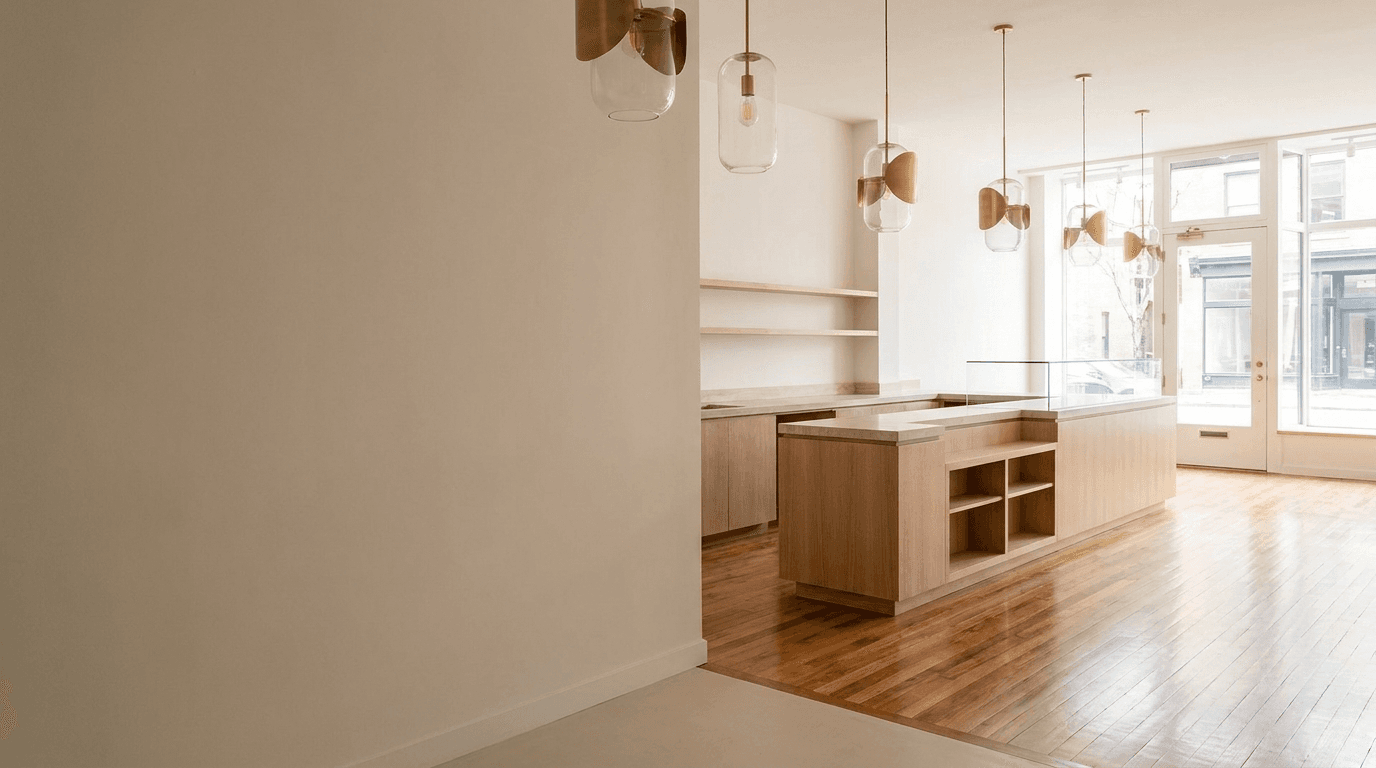
Where the leverage concentrates in commercial spaces: customer-facing finishes, because they are what the reopening announces; lighting, which does more for perceived quality per dollar than any other commercial spend; layout efficiency, if the claim already opened the relevant walls, since seating counts, workflow, and storage all live there; and accessibility improvements, which are easiest and cheapest to deliver while the space is already under construction and which widen who can walk through the door.
The same disciplines apply. Improvements are itemized separately from the restoration scope, the lease decides what needs landlord consent, and everything is priced before drawings close. GP delivers tenant improvements as a core service, so the restoration crew and the TI crew are the same crew, one scope, one schedule, one standard.
Priced in Line Items, Split in Writing
Every upgrade conversation at GP ends in a document, not a handshake. The scope shows the insurer-funded restoration line by line, and each owner-funded upgrade as its own priced item beside it. You can see exactly where the claim's money stops and yours starts, approve or strike any line independently, and hand the whole thing to your adjuster without a single blurred boundary.
That transparency is not paperwork for its own sake. It keeps the claim uncontested, keeps the upgrade decisions unemotional, and means the project you approve is the project you get. And whichever lines you keep, restored and upgraded alike, the finished work carries our lifetime warranty.
The Insurance Restoration Series
Where this guide sits in the sequence, depending on where you are in your claim.

    Stage 1

    When damage strikes

    Stabilization, documentation, and understanding the rebuild ahead.

    Stage 2

    Weighing your options

    The settlement decision and your rights during the claim.

    You are here

    Spending intelligently

    You are here. Where the approved budget and your increment work hardest.

    Stage 4

    The starting point

    The overview for the full insurance restoration service.

FAQ

Strategic Upgrade Questions, Answered

The Opening Is Already Paid For

Every restoration includes a brief window where better is unusually cheap, and it closes when the drawings do. A free scope review with GP maps your specific claim against the categories on this page: what the approved budget already covers, where a modest increment would work hardest, and what we would leave alone. Straight answers, real numbers, no obligation.

Book a Free Scope Review